Mobility in Pilates: Why It's More Than Just Flexibility (And How to Build It Safely)
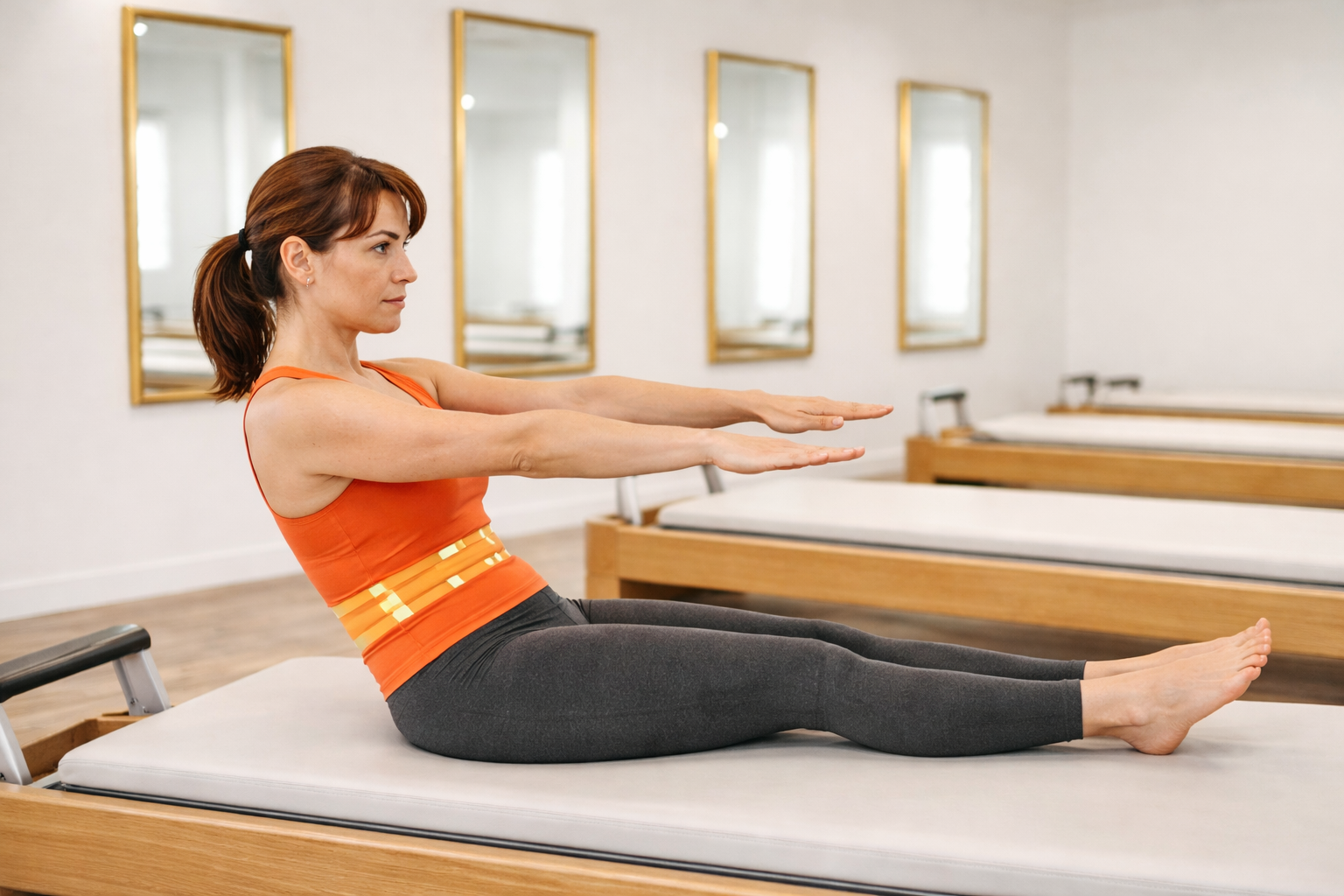
The Roll Up: building true spinal mobility with core control and precision.
In today's fitness world, everyone talks about mobility, but it's often mixed up with flexibility. Flexibility is about how far your muscles can stretch passively, while mobility in Pilates means moving your joints freely, with full control and strength through their natural range. Pilates excels here because it builds mobility with stability using precise, breath-guided movements. Unlike static stretching or high-impact workouts, Pilates helps you move better in everyday life—with less stiffness, better posture, and lower injury risk.
Why Pilates Is One of the Best Ways to Improve Joint Mobility
Pilates isn't about forcing extreme ranges; it's smart, controlled work that lubricates joints, strengthens stabilizers, and rewires movement patterns.
Key reasons Pilates boosts mobility so effectively:
Full-range controlled movement Exercises like Roll Up, Spine Twist, and Swan take joints slowly through their complete range, improving synovial fluid flow and reducing compensatory tension.
Deep core and stabilizer activation By engaging the transverse abdominis, multifidus, pelvic floor, and shoulder/hip stabilizers, you gain mobility plus control—so you get more range without instability or pain.
Enhanced body awareness and alignment Pilates emphasizes neutral alignment and mindful connection, helping break bad habits (like excessive lumbar arching or shrugged shoulders) for cleaner, more efficient motion.
Everyday and preventive benefits Reduced morning stiffness, easier bending/reaching/turning, better posture, and support for conditions like mild arthritis, lower back issues, or desk-job tightness (always consult a pro if needed).
Mobility vs Flexibility in Pilates – Key Differences
Many people stretch endlessly but still feel restricted. That's often because they chase flexibility without building the strength to control it.
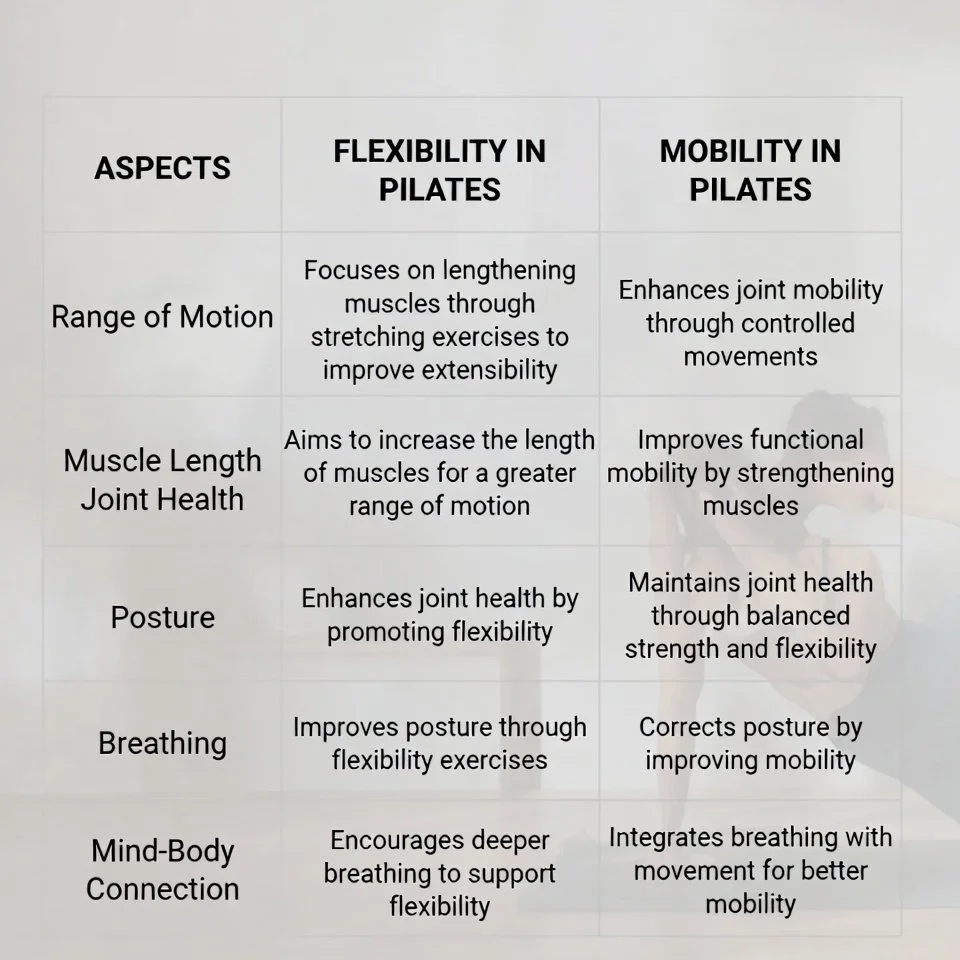
Pilates delivers functional mobility—you don't just become bendy; you become capable and confident in motion.
Top Pilates Exercises to Build Mobility (Try These at Home or in Class)
Incorporate these 2–3 times per week for noticeable improvements. Focus on quality: 6–10 slow, breath-synced reps per side.
Swimming (on all fours) — Full spinal mobility and thoracic opening
Spine Stretch Forward + Twist — Forward flexion, rotation, and chest expansion
Leg Circles / Hip Circles — Hip mobility without lumbar strain
Swan Prep or Full Swan — Thoracic extension and shoulder/chest opening
Side Kick Series — Hip mobility combined with core stability
Mermaid or Side Bend — Lateral flexion and combined rotation
Shoulder Bridge with Mobility Variations — Hip and shoulder range with glute activation
Pro Tip: Always exhale on effort or deepening, inhale to prepare. Move slowly—Pilates mobility gains come from precision, not speed.
If your body feels "stuck" after long desk days or workouts, adding focused Pilates mobility sessions can change everything. In just a few weeks, most people notice easier movement, reduced aches, and more freedom in daily activities. Pilates doesn't make you overly flexible at the expense of strength—it builds smart, sustainable mobility for life.
Have you felt the difference in your body since starting Pilates? Which exercise has given you the biggest mobility boost—or which one challenges you most? Share in the comments—I'd love to hear your experience!
#Pilates #MobilityInPilates #PilatesForMobility #MobilityVsFlexibility #PilatesBenefits #JointMobility #FunctionalFitness